

 See My Latest Article on HelloNation
Dust collects in places that are easy to overlook: the tops of ceiling fans, narrow gaps behind furniture, air returns, cabinet tops, and the spaces above doors. Removing it effectively requires the right tool, a controlled technique, and enough care to avoid spreading particles through the room.
Why does dust collect in hidden areas?
Dust is made of a mixture of fine household particles, including fabric fibers, soil, skin flakes, pollen, and particles brought indoors through doors, windows, and ventilation systems. Air movement carries these materials toward ledges, corners, textured surfaces, and areas where circulation slows.
In Ann Arbor, seasonal changes can affect indoor dust. Spring and summer may bring more pollen through open windows, while winter heating can circulate dry particles and fibers. Older homes, apartments, and houses with radiators, baseboard heaters, textured trim, or built-in cabinetry may also have more narrow surfaces where dust settles unnoticed.
Dust tends to build up fastest on:
- Ceiling fan blades and light fixtures
- Tops of cabinets, refrigerators, and bookcases
- Door frames, picture rails, and molding
- Window blinds, curtain rods, and shades
- Air vents, return grilles, and radiator covers
- Spaces beneath appliances and furniture
- Electronics, cords, and narrow shelving
- Bathroom exhaust fan covers
- Wall corners and ceiling edges
What is the safest way to dust high surfaces?
Use an extendable microfiber duster or a vacuum with a soft brush attachment. Work from high surfaces downward so loosened dust lands on areas that have not yet been cleaned.
Before starting, remove fragile objects from nearby surfaces. If using a step stool, place it on a level, dry floor and avoid leaning sideways. A stable extension tool is often safer than standing on a chair or reaching beyond balance.
For ceiling fans, turn the fan off and allow the blades to stop completely. A flexible microfiber sleeve can collect dust with less scattering than a dry feather duster. For especially dusty blades, place an old pillowcase over each blade, gently wipe, and pull the case off while keeping the dust contained inside.
High ledges and cabinet tops can be cleaned with a vacuum brush followed by a slightly damp microfiber cloth. The cloth should be damp enough to capture residue but not wet enough to leave moisture on unfinished wood, painted trim, or electrical fixtures.
How can dust be removed from narrow gaps?
Narrow spaces respond best to thin, flexible tools rather than forceful scrubbing. A vacuum crevice attachment can remove loose dust from gaps beside appliances, between radiator sections, and along the edges of built-in furniture.
For very small spaces, useful options include:
- A soft, narrow detailing brush
- A microfiber cloth wrapped around a ruler or flexible plastic tool
- A long-handled duster designed for vents or blinds
- A vacuum attachment covered with a thin piece of mesh fabric
- A clean, soft paintbrush for delicate objects and electronics
If a vacuum attachment is too large, covering its opening loosely with mesh can help prevent small objects, screws, or loose parts from being pulled into the vacuum. Do not block the airflow completely, and do not use this method near loose electrical components.
Avoid pushing dust deeper into a gap. Use short strokes that pull debris toward the open side, then vacuum the loosened material.
How do you clean dust from vents and air returns?
Turn off the heating or cooling system before cleaning vent covers or return grilles. Remove accessible covers carefully and vacuum both the grille and the surrounding frame. If the cover is washable, clean it with mild soap and water, then dry it completely before reinstalling it.
Do not spray cleaner directly into a vent or return opening. Moisture can damage nearby materials and may create conditions that allow mold to grow. A vacuum with a brush attachment is generally suitable for surface dust, but it should not be forced deep into ductwork.
Air returns often appear dusty because they pull room air toward the heating and cooling system. A dusty grille does not automatically mean the entire duct system needs cleaning. Focus first on regular surface cleaning, replacing filters according to the equipment instructions, and keeping the area around the return unobstructed.
What is the best method for dusting blinds, shades, and curtain rods?
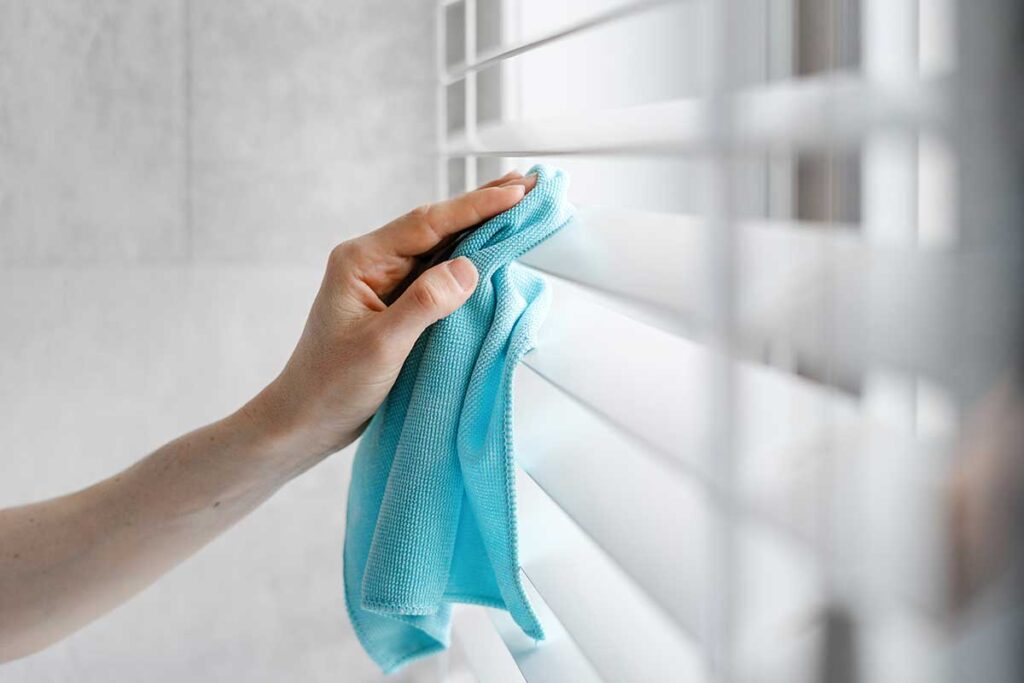
Close blinds so the slats face one direction, then use a microfiber duster or vacuum brush from top to bottom. Reverse the slats and repeat. Work gently because older plastic, fabric, or wood blinds can bend or crack.
For fabric shades, begin with a vacuum brush on low suction. Test an inconspicuous area before using any damp method. Curtain rods and rings can usually be wiped with a dry or lightly damp microfiber cloth after the curtains are moved aside.
Window areas may collect both dust and seasonal pollen. During warmer months, wipe the sill and frame more frequently if windows are left open. Cleaning screens carefully can also reduce the amount of loose material entering the room, but screens should be removed only when they can be handled safely.
How should dust be removed from electronics?
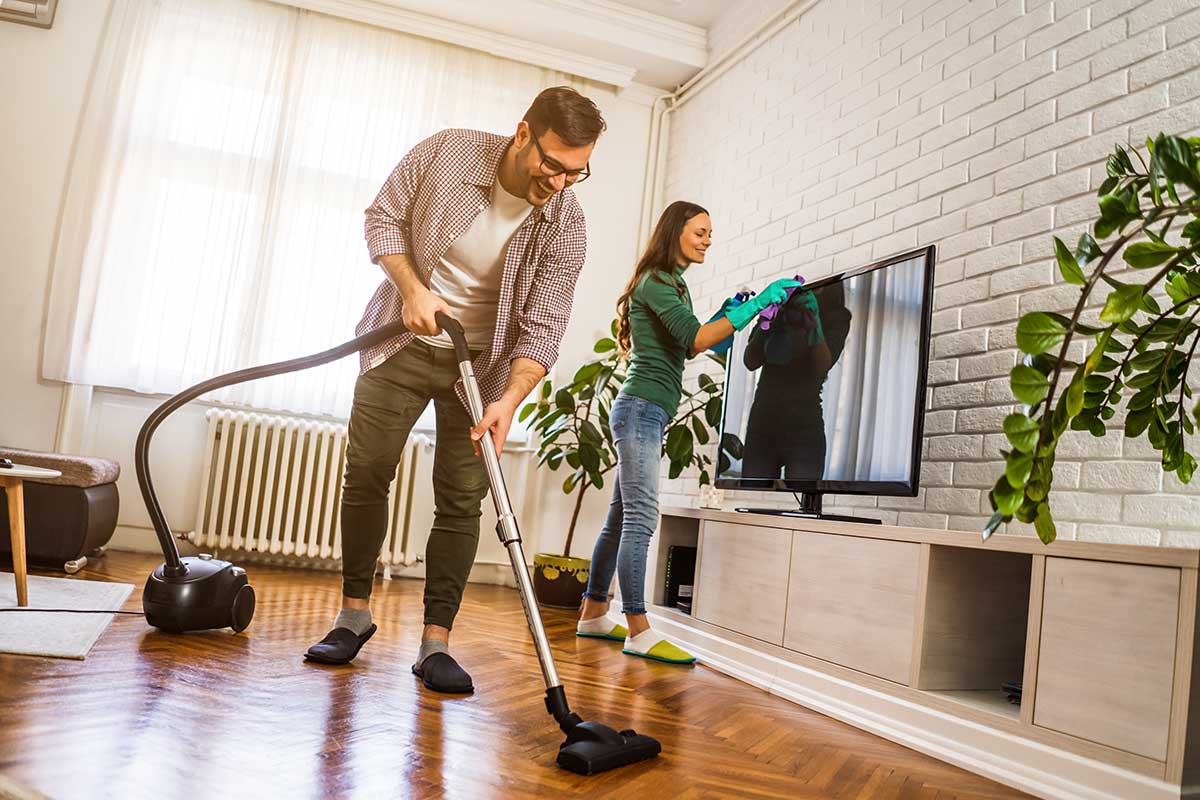
Use a dry microfiber cloth or a soft, clean brush for televisions, speakers, computer equipment, and other electronics. Unplug equipment before cleaning around ports, cords, and ventilation openings.
Do not spray liquid onto a device. Apply a small amount of cleaner to a cloth only if the manufacturer’s instructions allow it, and keep moisture away from openings. Compressed air can move dust into the device rather than removing it, especially when used too close or at the wrong angle.
For cords, gently wipe from one end to the other rather than pulling or sharply bending them. Dust behind electronics can be removed with a crevice tool, provided the vacuum does not contact delicate components.
How do you clean dust beneath furniture and appliances?
Start by removing loose items from the floor. Use a vacuum wand or low-profile attachment to reach beneath beds, sofas, cabinets, and appliances. A flat microfiber mop can help collect the remaining film of dust from hard flooring.
Move lightweight furniture only if it can be handled without strain or damage to the floor. Place protective pads under legs when sliding pieces across hardwood or other easily scratched surfaces.
For refrigerators, ranges, and laundry equipment, follow the appliance instructions before moving anything. Some appliances are connected to gas, water, electrical lines, or venting that should not be disturbed casually. If an appliance cannot be moved safely, clean the accessible edges and use a long, narrow vacuum attachment rather than forcing the unit forward.
Should dust be vacuumed or wiped first?
Vacuum loose dust first, then wipe remaining residue with a microfiber cloth. This two-step method reduces the amount of dust that becomes airborne or spreads across nearby surfaces.
A dry cloth works well for light dust on delicate or unfinished surfaces. A slightly damp cloth is more effective for settled dust mixed with cooking residue, skin oils, or outdoor particles. Rinse or replace cloths as they become dirty; otherwise, the cloth may redistribute dust.
For rooms with significant buildup, open a window only when outdoor air quality and weather conditions are suitable. Otherwise, use normal ventilation and avoid creating strong air currents that carry dust into cleaned areas.
How often should hard-to-reach places be cleaned?
Most high and narrow surfaces need attention every one to three months, while homes with pets, ongoing renovations, open windows, or forced-air heating may need more frequent cleaning. Air returns, bathroom exhaust covers, and ceiling fans often show buildup sooner than cabinet tops.
A practical routine is to divide the home into zones:
- Clean ceiling-level surfaces and light fixtures during one session.
- Clean vents, returns, blinds, and window areas during another.
- Clean beneath furniture and appliances when floors are already being maintained.
- Inspect overlooked ledges after seasonal changes or home improvement projects.
Seek specialized help only when dust is mixed with suspected mold, lead-based paint debris, asbestos-containing material, heavy construction residue, animal waste, or other potentially hazardous substances. Ordinary household dust can usually be managed with a vacuum, microfiber tools, stable access equipment, and a methodical top-to-bottom routine.