

 See My Latest Article on HelloNation

Kitchen appliances collect more than visible crumbs and spills. Grease can settle inside ventilation openings, mineral deposits may build around water connections, and damp areas can develop odors or microbial growth. For households in Ann Arbor, MI, a consistent cleaning routine helps protect food safety, appliance performance, and indoor air quality without relying on harsh products.
What should be cleaned first?
Start with surfaces that touch food, handles used frequently, and areas where moisture or grease accumulates. Cleaning is more effective when loose debris is removed before water or detergent is applied.
A practical order is:
- Remove food, dishes, racks, trays, and removable parts.
- Wipe away crumbs and dry debris.
- Wash removable pieces separately in warm water with dish detergent.
- Clean the appliance’s interior surfaces.
- Wipe controls, handles, and exterior surfaces.
- Dry everything thoroughly before reassembly.
This order prevents dirty water from spreading from heavily soiled areas to cleaner surfaces. It also makes it easier to notice damage, unusual odors, or leaks that may need attention.
How should a refrigerator be cleaned?
A refrigerator should be cleaned with mild dish detergent, warm water, and a soft cloth. Strong fumes and abrasive powders are unnecessary for routine care and may damage interior finishes or leave odors near food.
Remove food one shelf or drawer at a time so the door does not remain open longer than necessary. Discard items with visible spoilage, leaking containers, or uncertain storage histories. Wash shelves and drawers only after allowing glass components to warm slightly; placing cold glass into hot water can cause thermal shock.
Pay attention to overlooked areas:
- Door gaskets, where crumbs and sticky residue collect
- Drawer tracks and corners
- The underside of shelves
- The drip pan or drain opening, if accessible
- The top surface, especially in kitchens with limited ventilation
A refrigerator should not be packed so tightly that air cannot circulate. After cleaning, dry the gasket and check that it seals evenly. A loose or cracked gasket allows warm air to enter and may increase condensation.
What is the safest way to clean an oven and cooktop?
Allow the oven, cooktop, and nearby surfaces to cool completely before cleaning. For routine soil, a damp microfiber cloth and a small amount of dish detergent are usually sufficient.
For baked-on residue, soften the material with a damp cloth rather than scraping aggressively. A plastic scraper may help on compatible smooth surfaces, but metal tools can scratch glass or coated finishes. Follow the appliance manual before using a commercial oven cleaner, especially with self-cleaning ovens, convection fans, exposed heating elements, or catalytic liners.
Avoid spraying liquid directly onto burner controls, electrical openings, heating elements, or ventilation slots. Apply cleaner to a cloth instead. On gas cooktops, remove grates and burner caps only when cool, then dry all pieces fully before replacing them. Moisture or misaligned components can interfere with ignition.
A common misconception is that a self-cleaning cycle eliminates the need for routine wiping. It does not. The cycle is designed for heavy interior residue, while spills around the door, control panel, racks, and cooktop still require regular cleaning. Use ventilation during any high-heat cleaning cycle, particularly in tightly sealed homes.
How often should a range hood and microwave be cleaned?
Range hoods need more frequent attention than many households expect because grease can collect on filters and nearby cabinet surfaces. Wipe the underside weekly if cooking produces visible vapor or splatter. Wash metal filters according to the manufacturer’s instructions, then dry them completely before reinstalling. Disposable filters should be replaced as directed rather than washed.
Do not immerse electrical or charcoal filter components unless the manual specifically permits it. A clogged filter reduces airflow and allows more grease to settle on walls, ceilings, and cabinets.
For a microwave, remove the turntable and wash it separately. To loosen dried food, place a microwave-safe container of water inside and heat it briefly until steam forms. Let the interior sit for several minutes, then wipe it clean. Never operate the appliance empty, and never use metal scouring pads inside.
Clean the door seal carefully. Food residue in the seal can prevent the door from closing evenly and may create odor problems.
How can dishwashers and garbage disposals be cleaned?
Dishwashers should be cleaned by checking the filter, spray arms, door edges, and lower seal. Food particles often remain below the filter or along the bottom of the door where they are easy to miss.
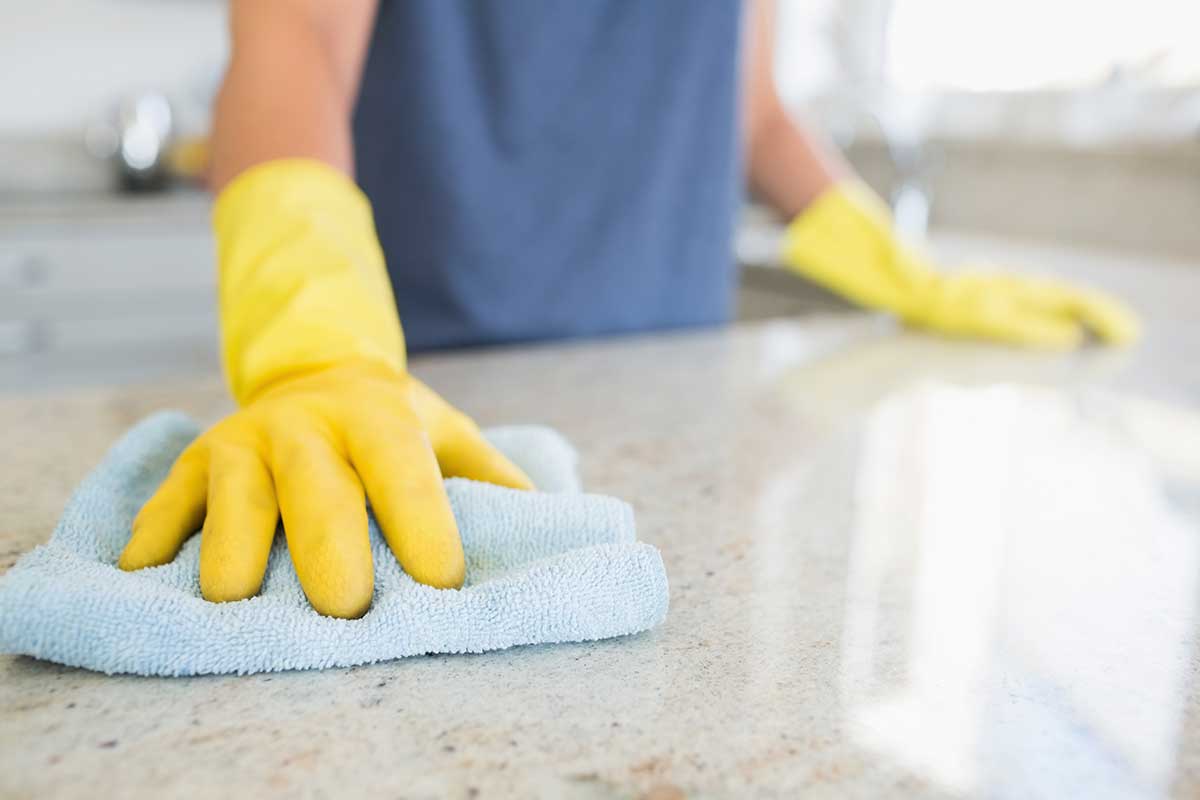
Remove the filter only as described in the manual. Rinse it under warm water and use a soft brush for trapped debris. Check spray-arm openings for food particles, but do not force sharp objects through them. Wipe the door gasket and the area beneath the door with a damp cloth.
Run a maintenance cycle only with a product approved for the appliance. Do not mix cleaners, and do not combine chlorine bleach with vinegar or other acidic substances. Some dishwasher interiors and components are not compatible with bleach.
For a garbage disposal, run cold water while operating it briefly, then continue the water for several seconds afterward. Wipe the rubber splash guard from above and below when possible. Never place hands inside the disposal. Avoid treating it with drain cleaners, which can create dangerous chemical residue and damage plumbing.
What cleaning practices should be avoided?
Several common methods can cause more harm than good:
- Mixing vinegar, bleach, ammonia, or other cleaning chemicals
- Using abrasive powders on stainless, glass, enamel, or coated surfaces
- Spraying liquid into switches, outlets, motors, or control panels
- Cleaning hot glass with cold water
- Reassembling wet filters, racks, burner parts, or seals
- Using a steam cleaner where the manufacturer prohibits it
- Blocking refrigerator vents with food containers
- Scraping residue with knives or metal tools
Read the appliance manual before applying a new cleaner. Care instructions vary even among appliances that appear to have similar finishes.
How does local seasonal weather affect appliance cleaning?
Seasonal moisture matters in Ann Arbor. During humid summer weather, damp cloths, refrigerator seals, dishwasher edges, and disposal splash guards may stay wet longer, increasing the chance of odors. Dry these areas after cleaning and leave dishwasher and washing-related kitchen doors slightly open when the manufacturer allows it.
In winter, indoor heating can make air dry while tracked-in snow and melting ice add moisture near entryways and kitchen floors. Wipe water from appliance bases and nearby flooring promptly. Older homes may also have tighter corners, uneven flooring, or limited ventilation that makes it harder for spills to dry completely.
Good ventilation during cooking helps reduce grease buildup throughout the kitchen. Use the range hood when available, and avoid directing excessive moisture toward cabinets or appliance control panels.
When does an appliance need more than routine cleaning?
Cleaning is not a substitute for repair. Stop using an appliance and seek qualified assistance when there is a burning odor, damaged wiring, repeated electrical tripping, gas odor, a cracked power cord, water near electrical components, or a door that will not close securely.
Persistent mold-like odor, recurring leaks, unusual heat, or food spoilage despite correct temperature settings may also indicate a mechanical or seal problem. Document the symptom, unplug the appliance only when it is safe to do so, and consult the manufacturer’s safety guidance.
A simple schedule—weekly wiping of high-touch surfaces, monthly attention to filters and seals, and seasonal deep cleaning—keeps most kitchen appliances cleaner without unnecessary chemical use or excessive scrubbing.